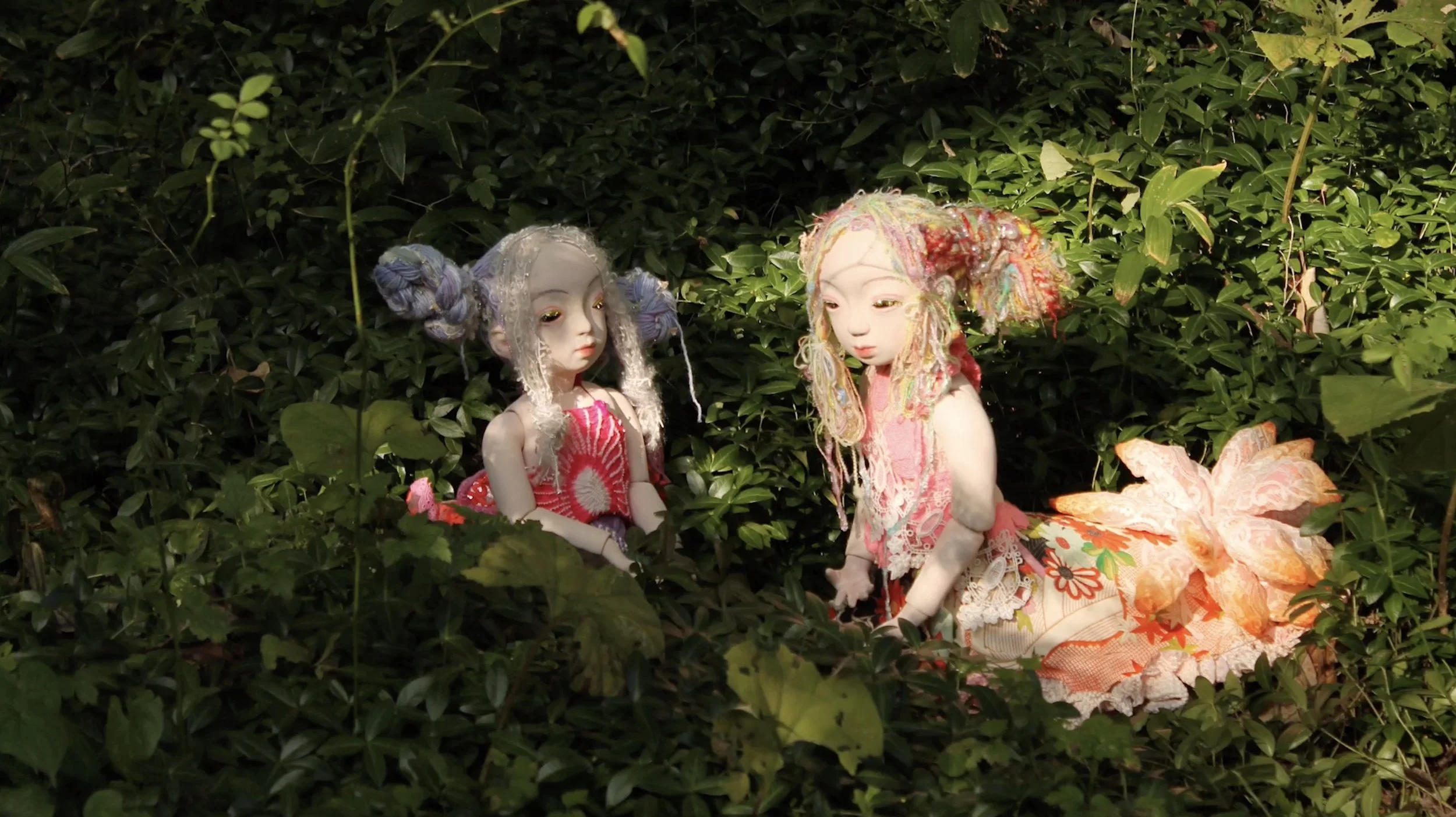
Yūko Asano
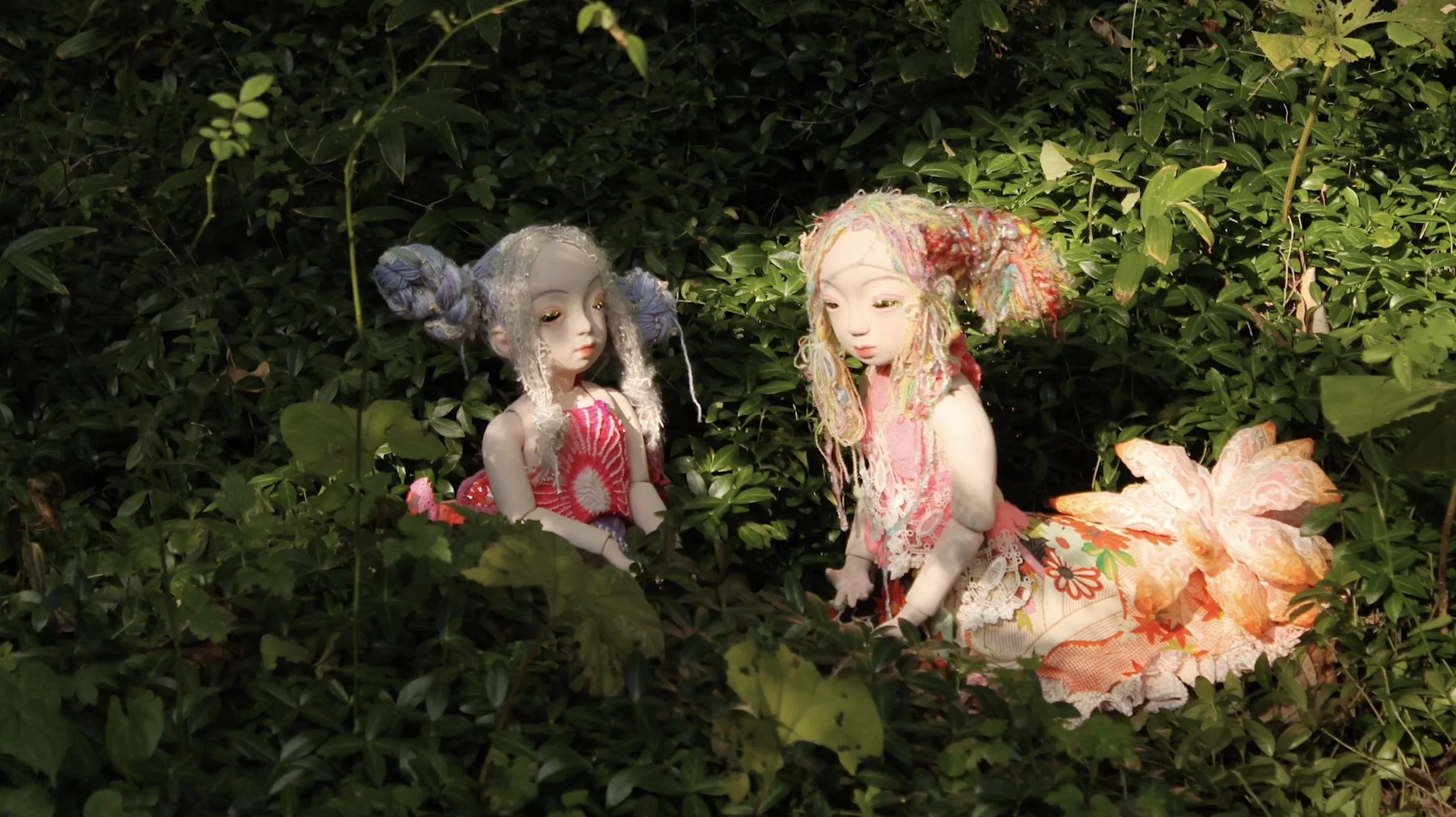
Yūko Asano, Sea Slug Sisters Go to Heaven ~Tanabata Edition~ (うみうし姉妹劇場 〜七夕編〜), 2017
This February, we are delighted to be screening two works by experimental animator Yuko Asano, whose 1990s stop-motion work The Life of Ants was screened on CCJ back in 2022. Our February program highlights two newer works by Asano — Sea Slug Sisters Go To Heaven ~Tanabata Edition~ (2017) and Light on the Other Side (2021). Both works take inspiration from traditional stories: Light on the Other Side uses painterly digital animation to illustrate a Buddhist parable of ecstatic transformation, and Sea Slug Sisters employs a finely wrought, decorative stop-motion to bring a mythic story, drawn from a scroll painting, to life.
Asano is one of two new artists who have been added to our online Viewing Library, along with Mari Terashima. For interested researchers, a selection of Asano and Terashima’s works, along with dozens of others, are available to watch on our online Viewing Library. Month-long access to our entire library is $100 — ideal for those who wish to take deeper look at a cross-section of Japanese experimental film from the 1960s-1990s.
THE PROGRAM WILL BE AVAILABLE FOR VIEWING ON CCJ’S VIEWING PLATFORM.
Become a member for just $5 a month to access our monthly programs, and share your thoughts on our screenings with us via Twitter, Instagram or Letterboxd.
Program
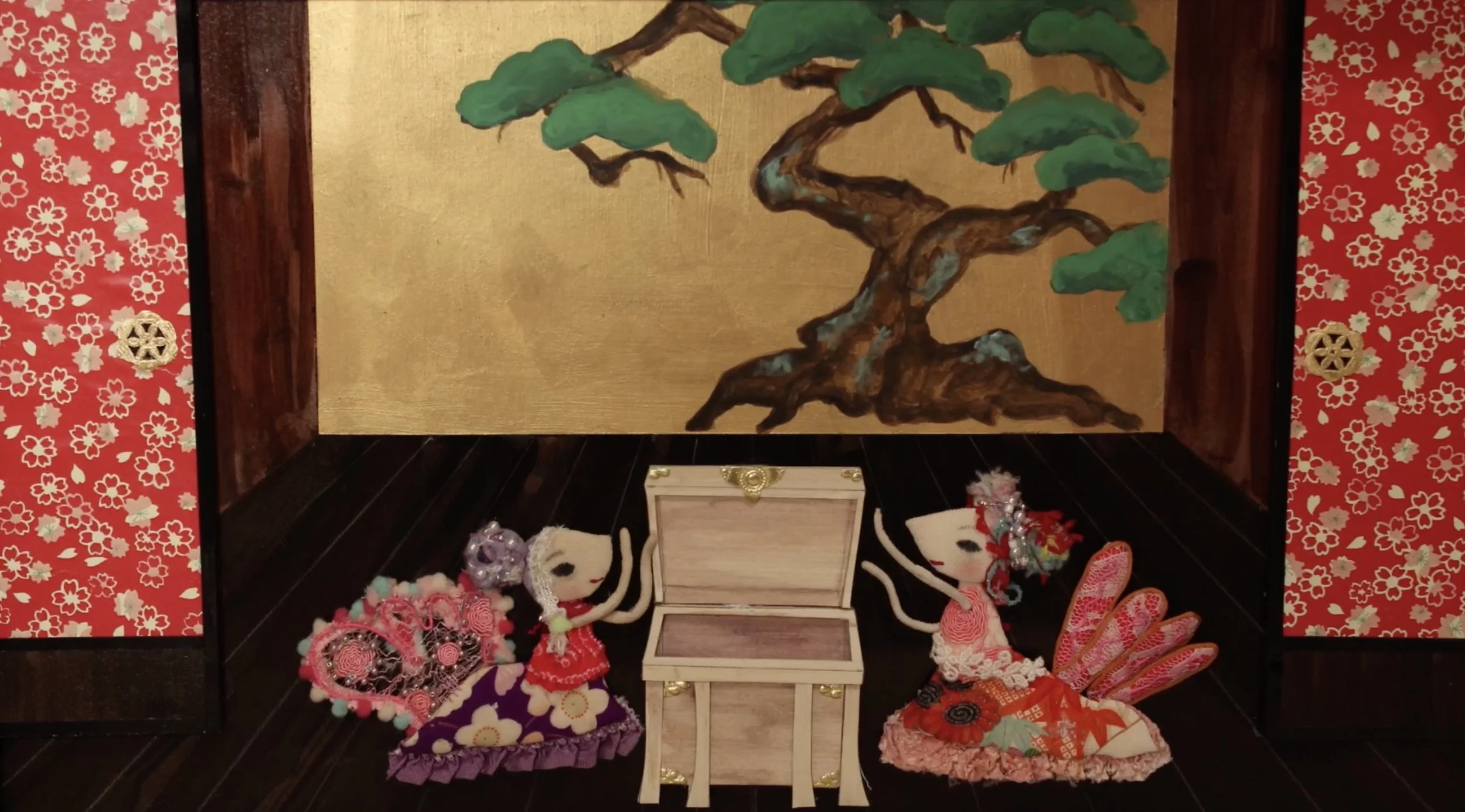
Yūko Asano, Sea Slug Sisters Go to Heaven ~Tanabata Edition~ (うみうし姉妹劇場 〜七夕編〜), 2017, 5:43 min, HD-VIDEO, color
This stop-motion animation is inspired by the folktale "Amewakahiko-soushi" or the “tale of the Heavenly-Young-Prince,” also known as the “Tanabata Monogatari,” a story that originated in China and is celebrated as part of the Qixi Festival. The episode illustrated in the film shows Princess Tanabata ascending to heaven to search for her husband Amewakahiko, who hasn't returned from the skies.
This animation does not depict the story directly, but was inspired by and born from the illustrations on a picture scroll, which depicts Princess Tanabata searching for her husband, aided by stars in the form of children above the clouds. In the animation, Princess Tanabata becomes two sea slug sisters who fight a dragon. This part is depicted as a play-within-a-play using semi-three-dimensional stop-motion animation. The puppet sisters perform a puppet show for the children. The music, composed by Kota Miki, uses traditional Japanese instruments such as the shamisen.
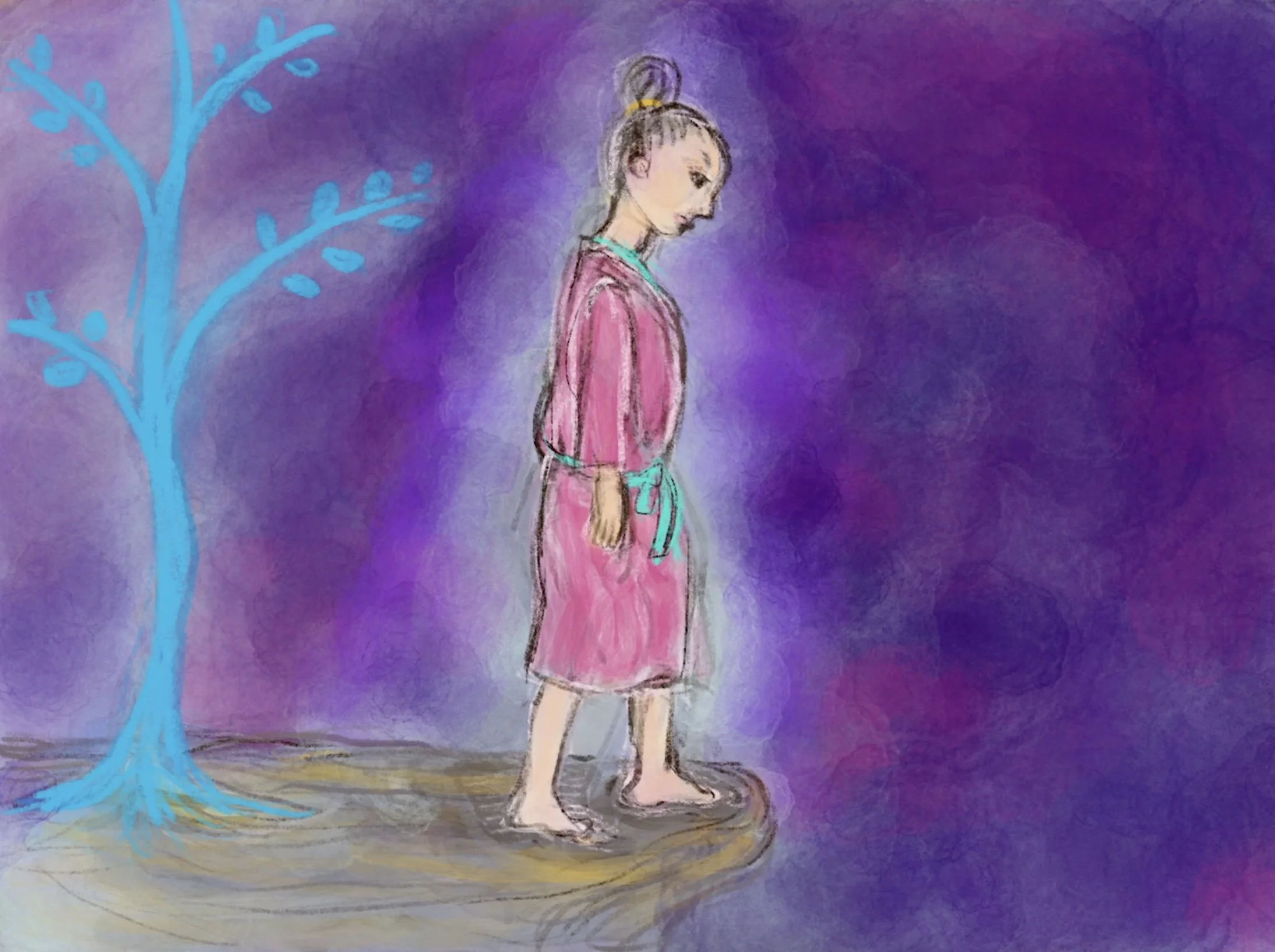
Yūko Asano, Light on the Other Side・むこうのひかり, 2021, 2:54 min, HD-VIDEO, color
This work was created as a music video for the artist mikimisa. Asano’s first venture into digital drawing, the work was inspired by a painting at Horyu-ji Temple in Nara which depicts the story of an Indian prince who saved a starving mother tiger and her cubs by feeding them his own flesh. Illustrating a Buddhist parable, it employs the technique of depicting several scenes within a single painting.
Yūko Asano 浅野優子
Yūko Asano was born in 1959 in Tokyo. Asano specializes in animation, film, and doll making. She began making 8mm films in high school. While learning oil painting at Musashino Art University, she started to learn animation and create dolls herself. She joined a group called “Animation 80,” which was formed by art college students in Tokyo, and engaged in independent animation, filmmaking, and exhibition. Her animated short Regular Polyhedra/Ki no naka sasu sakana no ki was selected for Pia Film Festival in 1985. It was not only screened in Japan, but also at the Torino Film Festival in Italy. She then expanded her creation into the realm of stop-motion animation using puppets, and her animation works including The Life of Ants/Ari no seikatsu (1994) have been screened at various film festivals. She also creates dolls to exhibit in the haunted house in an amusement park, Hanayashiki in Asakusa. She has been currently interested in handicraft in addition to doll making, and she seeks the ways to incorporate the elements in handicraft in her animation works. One of the most inspirational sauces is what is generally called “okan art” (“okan” means “mother” in Kansai dialect,) which is a handicraft practiced mainly by women, and that has been trivialized from the perspective of art history and practice proper. She teaches at Musashino Art University. (Wakae Nakane)