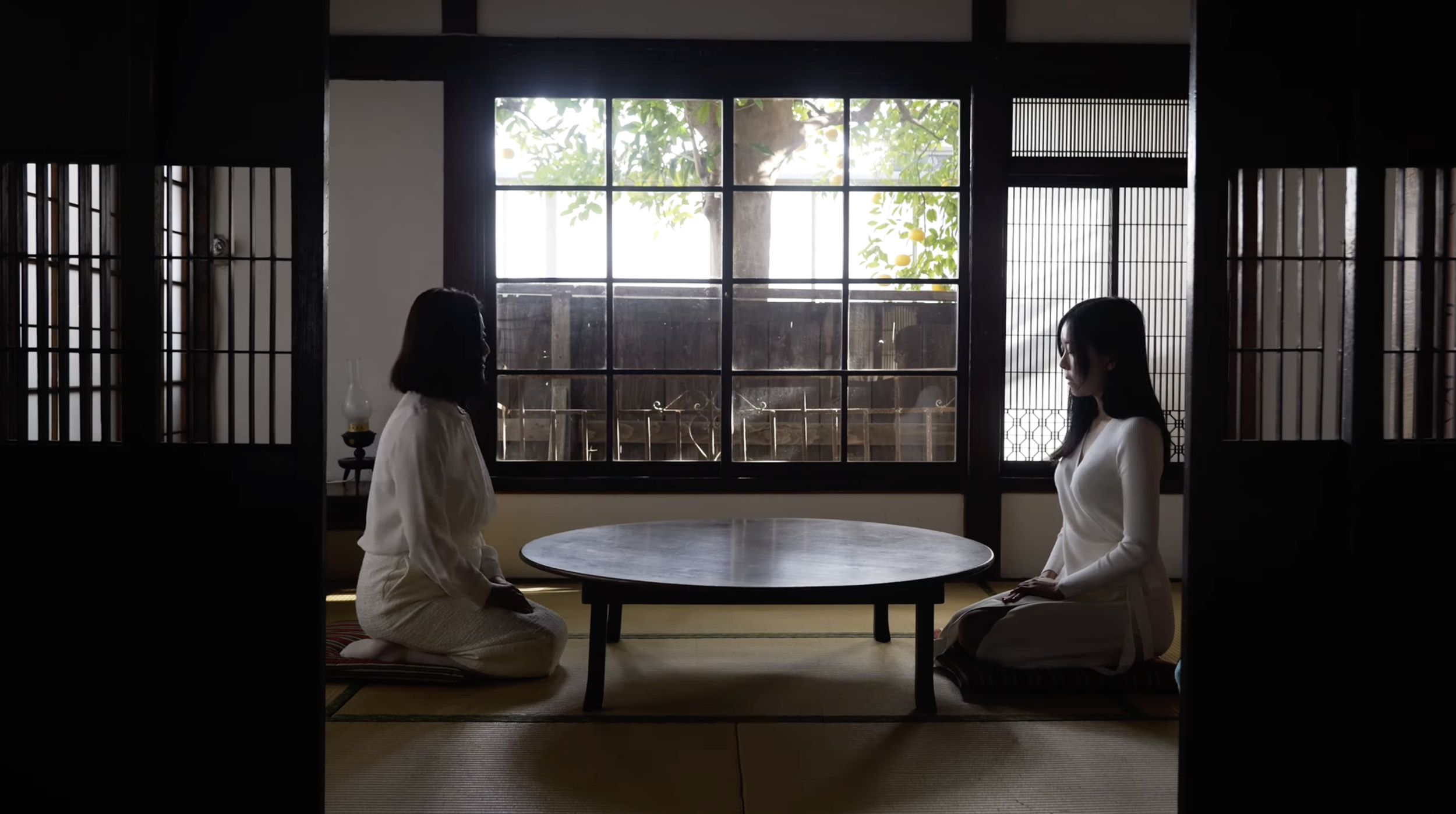
Maari Sugawara
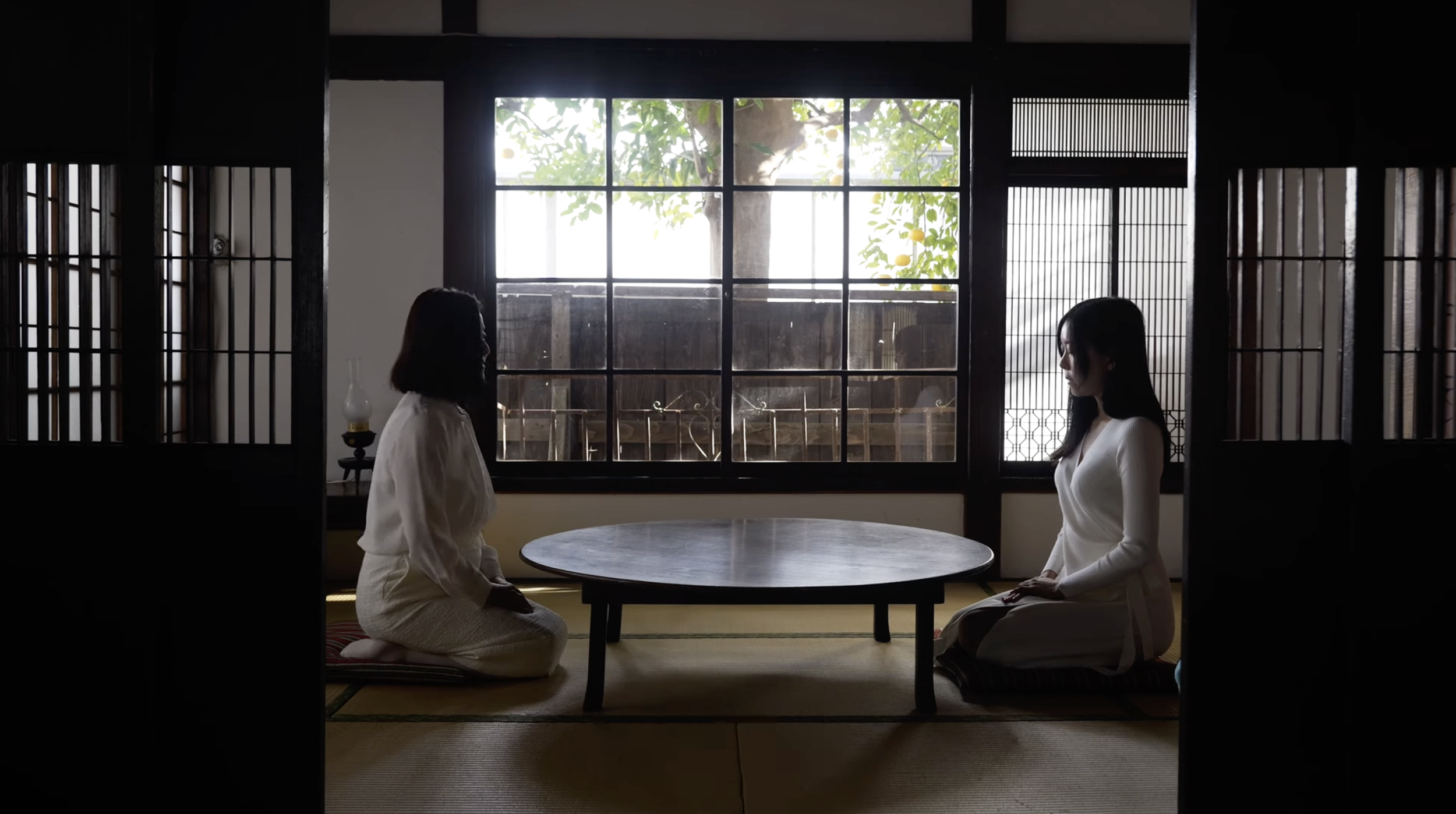
This April, we are delighted to present two works by interdisciplinary artist and researcher Maari Sugawara, originally created as a two-channel video installation entitled (S)mothering Myself: Feelings in Renting a Mother Part I & II (2024). Through dialogues between the artist and a mother-for-hire that submit the maternal dynamic to experimentation and interrogation, the work “explores the construct of motherhood in Japan, examining the queering of love, care, and emotional labour—forms of labour historically imposed on women and often left uncompensated.”
Sugawara is currently a PhD candidate at the City University of Hong Kong, where her research draws on media theory, visual culture, and feminist science and technology studies to examine governance, imperial afterlives, and technological mediation in contemporary Japan.
Program
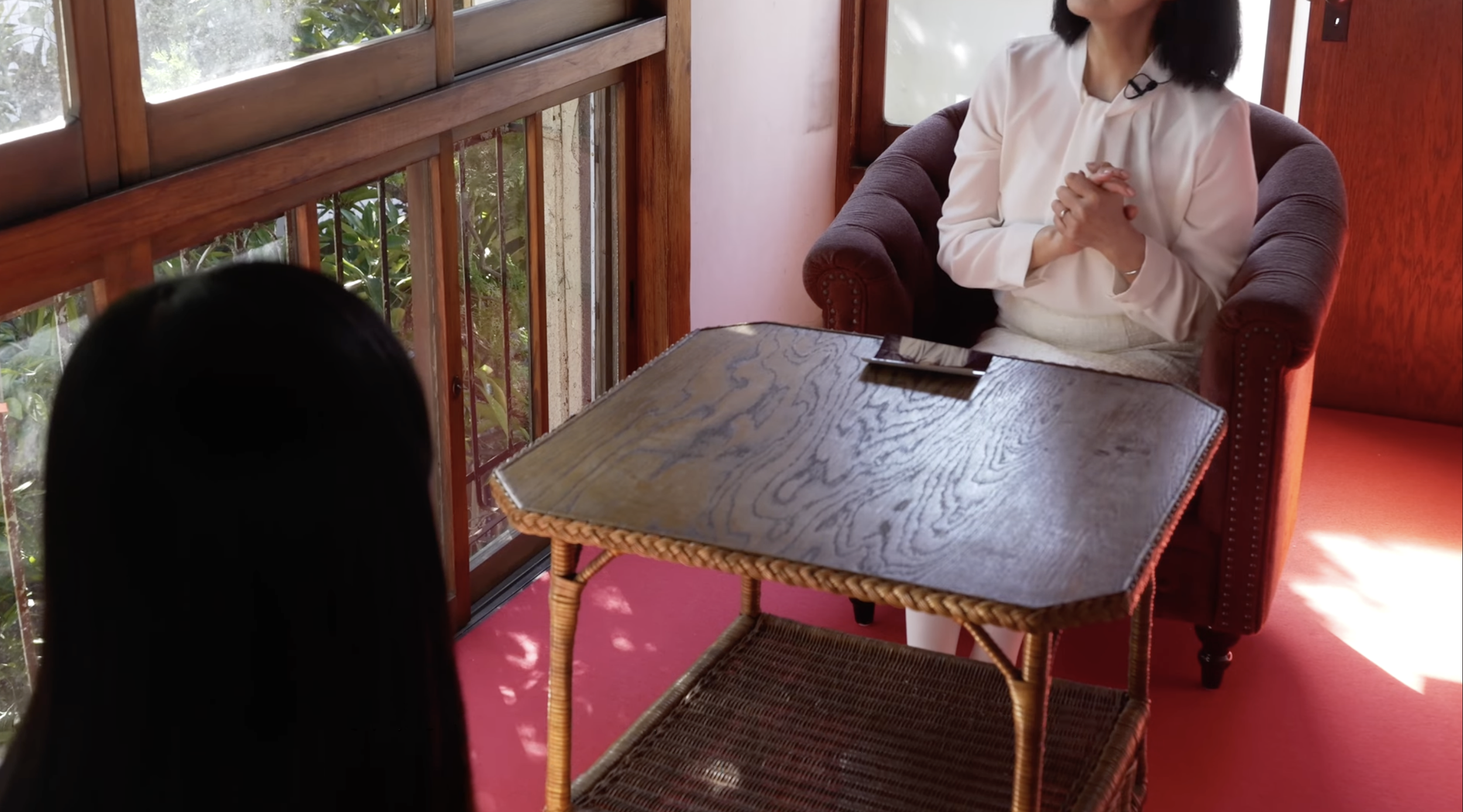
Maari Sugawara, (S)mothering Myself: Feelings in Renting a Mother, Part I, 2024, 22:44 min, digital video, color, sound
Part I unfolds through a role-play between myself and Suzuki-san, a rental mother, in which she performs the role of my mother and I that of her daughter. Drawing from my ethnographic research with rental mothers in Japan, the work approaches rental motherhood as a mediated site where care, intimacy, and obligation are negotiated through contracts, service protocols, and affective labour. In our conversation, I ask intimate questions: What was it like giving birth to me? What did you wish for me when I was born? Why did you leave my father? These questions move between sincerity and performance, exposing unstable boundaries between document and fiction, feeling and script. For me, role-play is not simply reenactment, but a method for rearticulating one’s relationship to power, desire, and social expectation. By staging maternal intimacy through hired care, Part I denaturalizes motherhood as an essential identity and instead reveals it as a socially organized, repeatable, and negotiated form.
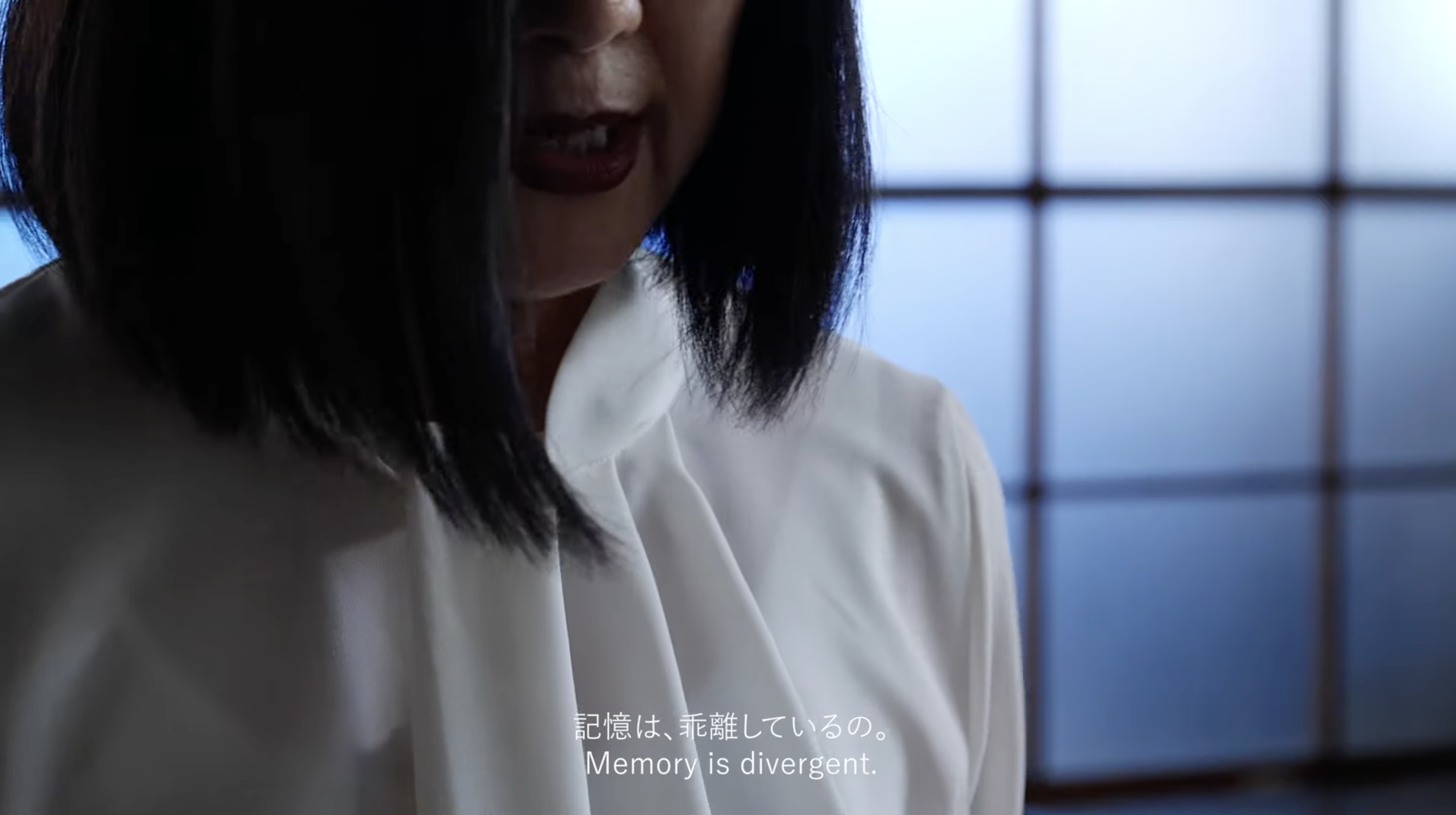
Maari Sugawara, (S)mothering Myself: Feelings in Renting a Mother, Part II, 2024, 18:04 min, digital video, color, sound
Part II unfolds as a conversation between a mother, portrayed by the rental mother Suzuki-san, and me. It draws on my interview with Suzuki-san, a divorcee in her sixties, while referencing the Japanese folklore figure of Yuki-onna (the Snow Woman). At first, the work presents itself as an ordinary exchange between mother and daughter. As the narrative develops, however, the boundary between fact and myth, reality and fantasy, becomes increasingly unstable. The tale of Yuki-onna is often framed as a tale of maternity, centered on a beautiful supernatural woman with the lethal ability to freeze men to death. In one version, she contemplates killing her husband after he breaks a promise, but ultimately refrains for the sake of their children.
This tale has undergone significant transformations through various translations and rewritings in the last century, marked by the sexualization and demonization of the mother figure, to the extent that there seems to be no record of the original tale. One particularly influential so-called original, shaped by an Orientalist gaze, was penned by Greek author Lafcadio Hearn, who wove autobiographical elements into his reimagining of it as a Japanese myth. By foregrounding the absurdity of dominant discourses surrounding motherhood and layering the work with multiple degrees of fictionality, I aim to denaturalize motherhood from any fixed or universal meaning, whether imposed through binary logic or cultural determinism.
THE PROGRAM WILL BE AVAILABLE FOR VIEWING ON CCJ’S VIEWING PLATFORM.
Become a member for just $5 a month to access our monthly programs, and share your thoughts on our screenings with us via Twitter, Instagram or Letterboxd.
Maari Sugawara
Maari Sugawara is an interdisciplinary artist and researcher currently pursuing a PhD at the School of Creative Media, City University of Hong Kong. She holds an MFA from OCAD University in Toronto and a BA from Waseda University in Tokyo. Her research draws on media theory, visual culture, and feminist science and technology studies to examine governance, imperial afterlives, and technological mediation in contemporary Japan. Her doctoral project, Affective Governance After Empire: Proxy Continuity in Contemporary Japan, investigates how post-1945 Japanese governance renders “continuity” administrable across culture, gender, care, and techno-futurity. Working across XR, moving image, installation, narrative, and performance, she explores entanglements between personal and geopolitical histories, imperial pasts and futures, desire, and violence. Her work has been presented internationally, including the solo exhibitions Leaky Economics, Reverberating Souls (Tokyo, 2025) and Algorithms of Innocence (Toronto, 2022).